
Seminar on Foreign Policy of Pakistan and Contemporary Challenges of International Politics
The University of Sialkot organized an insightful seminar on “Foreign Policy of Pakistan and Contemporary Challenges of International Politics”, arranged by the Department of Politics & International Relations in collaboration with the Department of Law. The session highlighted the evolving dynamics of Pakistan’s foreign policy and its significance in shaping national and global engagement.
Mr. Faisal Manzoor, Chairman Board of Governors, University of Sialkot welcomed the distinguished guests. He highlighted the efforts of Government of Pakistan specially the Prime Minister of Pakistan Mr. Muhammad Shahbaz Sharif, Field Marshal General Asim and Deputy Prime Minister Mr. Ishaq Dar, in shaping the important and significant role of Pakistan as the sole mediator in the US and Iran war. He emphasized that interaction of seasoned diplomats like Mr. Shamshad Ahmad Khan and academics like Prof. Dr. Muhammad Ibrahim with the students is essential to motivate them. Further, he also discussed the role of student community in the image building of Pakistan on international forums.
The Worthy Vice Chancellor, Prof. (Meritorious) Dr. Muhammad Khaleeq Ur Rahman, in his remarks, paid special thanks to the distinguished chief guests Mr. Shamshad Ahmed Khan (Former Foreign Secretary, Government of Pakistan, and Prof. Dr. Muhammad Ibrahim (Former Chairman, Department of History, GCU Lahore) for gracing the seminar.
The worthy Vice Chancellor, Prof. (Meritorious) Dr. Muhammad Khaleeq Ur Rahman, delivered a comprehensive and thought-provoking address on the importance of the seminar topic. In his address, he emphasized the significance of Pakistan’s constructive role in facilitating the ceasefire between the United States and Iran. He highlighted the visionary diplomacy of Pakistan’s leadership in contributing towards peace and stability in the region and beyond.
Mr. Gohar Masood Qureshi (Head, Department of Law) highlighted Pakistan’s contributions to international peace and its active role in peacekeeping missions. He also emphasized and appreciated the historic role of Pakistan’s diplomatic corp in establishing peace during the ongoing conflict of the US and Iran.
Dr. Ammara Tabbsum (Head, Department of Politics and International Relations) discussed key foreign policy challenges, including relations with neighbouring countries such as India and Afghanistan, regional conflicts, and the complexity of balancing relations with global powers.
The session continued with insights from Prof. Dr. Muhammad Ibrahim, who elaborated on the impact of global politics on Pakistan’s foreign policy, particularly focusing on economic diplomacy and the need for strong trade relations to improve Pakistan’s global standing. He also emphasized on the efforts of Foreign Office of Pakistan while facing the external challenges since its establishment in 1947. He discussed the role of the US for imposing sanctions on Pakistan like 1985 Pressler Amendment, 1995 Brown Amendment and then during 9/11 all sanctions were waived.
The Keynote Speaker, Mr. Shamshad Ahmed Khan, highlighted the key determinants of Pakistan’s foreign policy. He emphasized that Pakistan’s geopolitical and geostrategic location remains central in shaping its foreign policy decisions. He further stated that geography and neighbouring states cannot be changed; therefore, nations formulate their own foreign policies while keeping such realities in view. He outlined four principles of Pakistan’s Foreign Policy i.e., Quest for Security and Survival, Reliance on the West, Solidarity with the Muslim World, and Troubled Relationship with India. He discussed his experience during the Ambassador of Pakistan to the United Nations during 9/11 attack and elaborated how West look towards Pakistan. He highlighted that Pakistan emerged as the responsible Nuclear State which has been appreciated by Russia, China, the United States and other Western countries. This credibility enabled Pakistan to play a key and significant role as the sole mediator of the US and Iran War. He also highlighted the important role of current government led by Prime Minister and Field Marshal for their untiring efforts for the current peace process and recognition of Pakistan’s position as sole mediator.
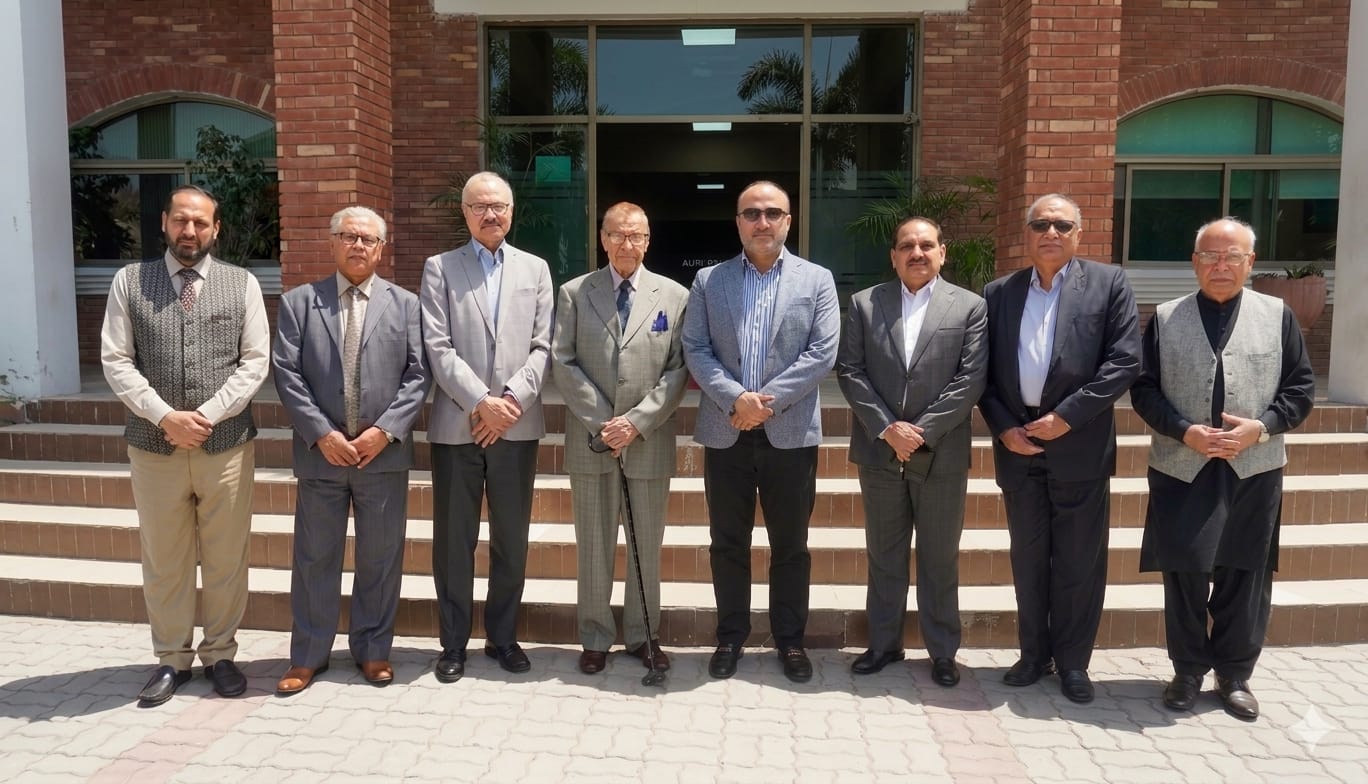
The seminar concluded with a message emphasizing the need for a balanced, independent, and forward-looking foreign policy, focused on national interests, peaceful engagement, and international cooperation. The session ended on a note with interactive discussions, group photographs, and the presentation of shields to the honorable guests as a token of appreciation.
The seminar proved to be an enriching academic experience, enhancing students’ understanding of global politics and Pakistan’s evolving diplomatic landscape. The students also appreciated the Prime Minister, Field Marshal, and Deputy Prime Minister for their day and night efforts to establish peace in the region and shaping the Pakistan’s Foreign Policy as key stakeholder of the international politics.